February 6, 2026
Understanding Electronic Flight Display (EFD)- PFD vs MFDSpartan College of Aeronautics and Technology is a prominent voice in the aviation space. These blogs are for informational purposes only and are meant to spark discussions within the aviation industry on a variety of topics.
Modern aircraft cockpits are built to help pilots manage a large amount of information efficiently. In many flight training environments today, traditional round “steam gauge” instruments have been replaced (or supplemented) by electronic flight displays, often referred to as a glass cockpit.
If you’re exploring flight training, two terms you’ll hear early on are:
Although both are part of a glass cockpit system, they serve different roles. Understanding the difference helps aspiring aviators build the foundational knowledge needed to interpret flight information and develop strong scanning habits as training progresses. The FAA recognizes PFDs and MFDs as common components of Electronic Flight Display (EFD) systems.
What Is a PFD (Primary Flight Display)?
The Primary Flight Display (PFD) is the main screen that shows the aircraft’s most essential flight information in one place. Instead of scanning multiple separate instruments for airspeed, altitude, attitude, and heading, pilots can reference a single, organized display.
The FAA defines a Primary Flight Display (PFD) as a unit that provides the primary display of key flight parameters (such as altitude, airspeed, heading (direction), and attitude) in a fixed layout located directly in front of the pilot.
What the PFD typically displays
While system features vary by aircraft and equipment, a PFD commonly includes:
Because it contains the most time-sensitive flight parameters, the PFD is often considered the pilot’s primary reference display during flight.
What Is an MFD (Multi-Function Display)?
The Multi-Function Display (MFD) is designed to support situational awareness and flight management. It expands beyond the primary flight instruments and often provides additional pages and overlays that help pilots better understand their position, route, and system information.
The FAA’s guidance on electronic flight deck systems recognizes MFDs as part of EFD installations used to present broader flight information beyond the primary flight parameters.

What the MFD commonly displays
Depending on the aircraft/system configuration, the MFD may include:
A helpful way to think about it:
Why This Matters in Flight Training
Training to fly involves more than memorizing what each display means; it’s also about learning to:
FAA training resources emphasize that advanced avionics and electronic displays change not only what information pilots see, but also how that information is organized, accessed, and managed.
For aspiring aviators, understanding PFD and MFD functions helps prepare for the way many modern aircraft cockpits are designed today.
What This Looks Like in Spartan Flight Training (Piper Archer TX + Garmin G1000)
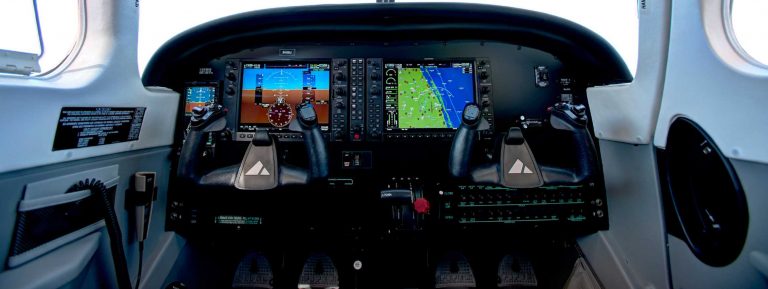
In Spartan’s flight training environment, students train in aircraft such as the Piper Archer TX, which is equipped with the Garmin G1000 integrated flight deck.
In this system:
This glass-cockpit environment helps students become familiar with the types of avionics systems they are likely to encounter in modern aviation while also building strong fundamentals step by step with instructor guidance.
If you’re interested in learning how modern aircraft cockpits work, from Primary Flight Displays (PFDs) to Multi-Function Displays (MFDs), light training is where these concepts come to life. At Spartan College of Aeronautics and Technology, students build foundational aviation knowledge step by step while training in aircraft such as the Piper Archer TX equipped with Garmin G1000 technology. Explore what flight training could look like for you by filling out our information form below to take a tour!
If you would like to learn more about Spartan College and our program offerings, fill out the form below to request information, and we will have one of our admissions representatives contact you.
Affiliate Partner Program | Jobs at Spartan | Terms of Use | Privacy Policy | Opt-out Policy | Privacy Notice - California Residents| Notice of Non-Discrimination | Website Accessibility Help | Transparency in Coverage Act| Cookie Settings | AI Reference Page | LLM Info (TXT)
© 2026 SPARTAN COLLEGE OF AERONAUTICS AND TECHNOLOGY. ALL RIGHTS RESERVED.