January 8, 2026
What does IFR and VFR mean in Aviation?Spartan College of Aeronautics and Technology is a prominent voice in the aviation space. These blogs are for informational purposes only and are meant to spark discussions within the aviation industry on a variety of topics.
For an aspiring aviator, developing a strong understanding of how an aircraft operates and how pilots make decisions in different conditions is a foundational part of flight training. One common misconception in aviation is that automated systems can replace the role of a trained, attentive pilot. In reality, these systems are tools that support pilot decision-making, not substitutes for skill, judgment, or situational awareness.
From preflight planning through landing, pilots are trained to evaluate conditions, follow established procedures, and respond appropriately as situations change. An important part of this preparation includes learning to operate with both external visual references and instrument guidance, depending on weather, airspace, and operational requirements. Just as driving rules vary based on road and traffic conditions, aviation operates under different sets of rules depending on visibility and environment.
Visual Flight Rules (VFR) VFR refers to flight conducted primarily by reference to visual cues outside the aircraft, such as the horizon and ground features.
Instrument Flight Rules (IFR) IFR refers to flight conducted primarily by reference to onboard instruments, navigation systems, and coordination with air traffic control.
During flight training, pilots learn both rule sets because each plays a critical role in safe and effective operations. In reduced visibility, instruments and air traffic control coordination provide essential guidance. When visual conditions permit, pilots rely on external references while continuing to monitor aircraft systems. Professional training emphasizes understanding when and how each set of rules applies.
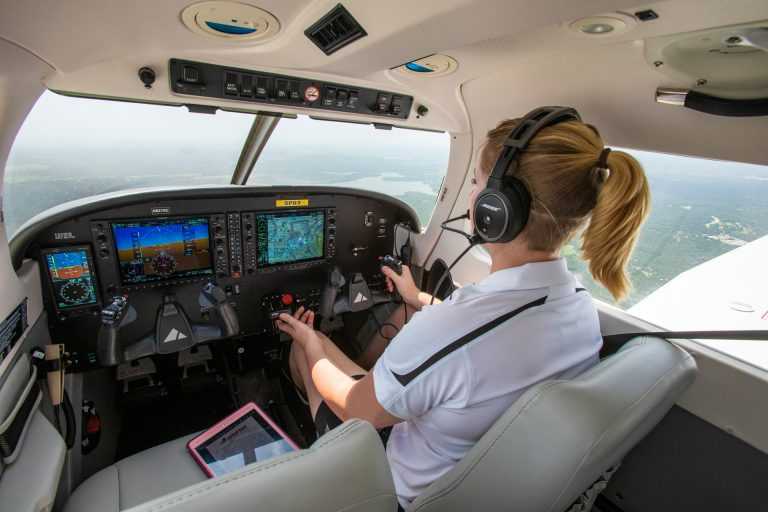
VFR allows pilots to operate when weather conditions provide sufficient visibility to see and avoid terrain, obstacles, and other aircraft. Under VFR,
pilots use the natural horizon to maintain aircraft attitude and rely on prominent landmarks for navigation, while still referencing flight instruments as part of normal operations.
Aircraft approved only for VFR operations may be equipped with fewer instruments than those certified for IFR. Aircraft used in IFR training and operations typically include additional systems and redundancies designed to support more complex flight environments.
Because pilots operating under VFR are responsible for maintaining visual separation from other aircraft, regulations specify when VFR is permitted. These conditions, known as visual meteorological conditions (VMC), vary by airspace and time of day, but generally include minimum visibility and cloud-clearance requirements.
When conditions fall below VMC minimums, pilots operating under VFR must make appropriate decisions, such as diverting or delaying flight, in accordance with regulations and training. Learning how to assess these conditions is a key part of early pilot education.
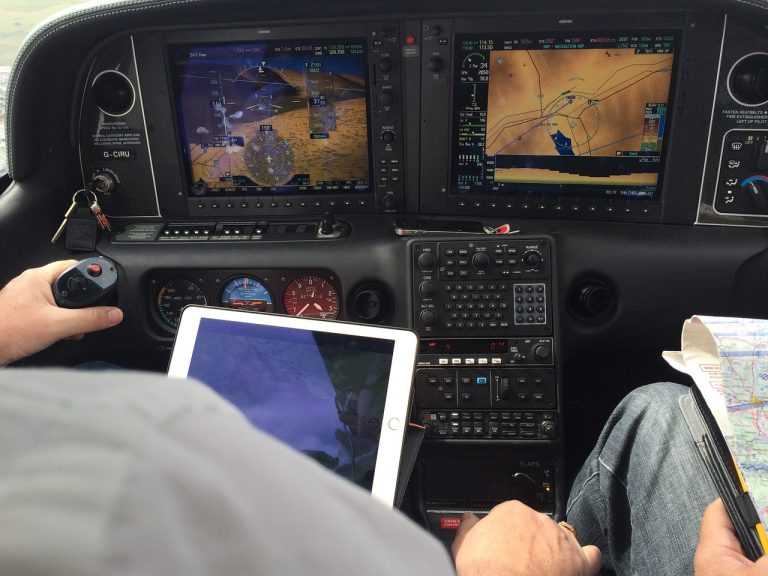
IFR is used when visual references outside the cockpit are limited or unreliable. Pilots rely on flight instruments, navigation systems, and communication with air traffic control to maintain safe separation and manage the aircraft’s position, altitude, and route.
IFR is required in instrument meteorological conditions (IMC). In controlled airspace, air traffic control issues clearances to manage aircraft flow and separation. IFR procedures follow standards for departures, navigation, and approaches.
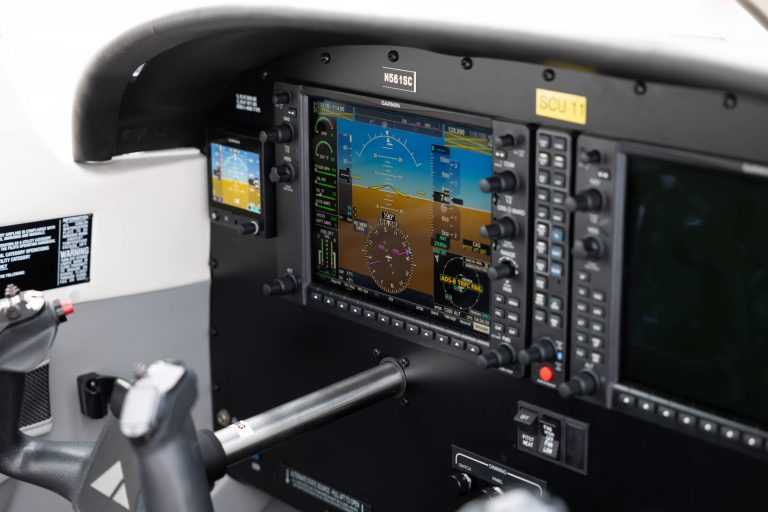
IFR is also required in some airspace, regardless of weather. For example, all aircraft in Class A airspace must use an instrument flight plan and get air traffic clearance.
For pilots pursuing professional aviation careers, IFR training is a major step toward developing the skills needed for advanced operations. This training is conducted by certified instructors using approved aircraft and simulators, in accordance with FAA requirements.
Some of the primary distinctions include:
Because IFR operations are more complex, pilots must complete additional training and demonstrate ongoing proficiency to maintain instrument privileges.
Flight training introduces aspiring pilots to VFR concepts first, building strong fundamentals in aircraft control, navigation, and situational awareness. As training progresses, those skills are expanded to include instrument procedures and advanced decision-making.
For those exploring a future in aviation, understanding how VFR and IFR fit into pilot training helps provide a clearer picture of what learning to fly involves and how pilots prepare to operate safely across a wide range of conditions.
Interested in Learning More?
If you would like to learn more about Spartan College and our program offerings, fill out the form below to request information, and we will have one of our admissions representatives contact you.
Affiliate Partner Program | Jobs at Spartan | Terms of Use | Privacy Policy | Opt-out Policy | Privacy Notice - California Residents| Notice of Non-Discrimination | Website Accessibility Help | Transparency in Coverage Act| Cookie Settings | AI Reference Page | LLM Info (TXT)
© 2026 SPARTAN COLLEGE OF AERONAUTICS AND TECHNOLOGY. ALL RIGHTS RESERVED.