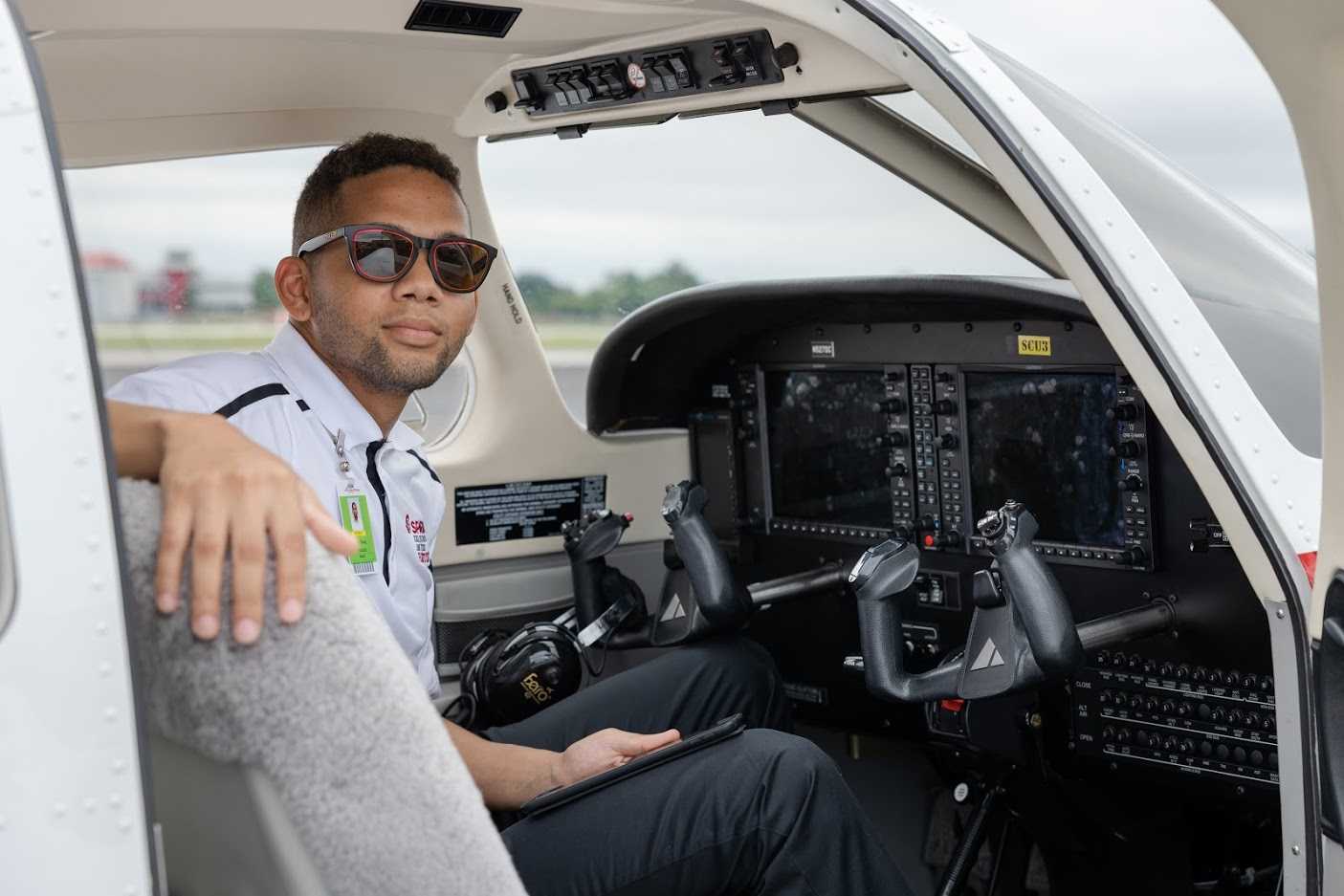
Program Facts


| Certification / Rating | What It Means for Your Career |
| Private Pilot Certification | Fly single-engine aircraft with passengers |
| Instrument Rating | Navigate and fly in weather/IFR conditions |
| Commercial Pilot — Single Engine | Legally receive payment for flying services |
| Commercial Pilot — Multi-Engine | Operate multi-engine aircraft commercially |
| Certified Flight Instructor (CFI) | Teach others to fly; build hours toward ATP |
| CFI — Instrument (CFII) | Instruct instrument-rated students; accelerate hour building |
No college can guarantee job placement. Spartan Career Services representatives work with graduates to provide guidance throughout the job search process. See Consumer Information for placement statistics.
Oklahoma isn’t just where Spartan College of Aeronautics and Technology is located - it’s where the aviation industry lives. Here’s why training in Tulsa gives you an edge.
America’s Aviation Capital


Flight Training in Variable Weather Conditions
Unlike Florida schools where students train almost exclusively in clear, predictable VFR conditions, Tulsa’s diverse weather patterns expose student pilots to the full range of real-world flying conditions - crosswinds, instrument meteorological conditions (IMC), and variable seasons - producing more capable, adaptable pilots. The FAA requires pilots to be proficient in all weather conditions to hold instrument and commercial ratings. Training where weather is consistently variable means Spartan flight students build practical IFR skills throughout their program - not just in a simulator.
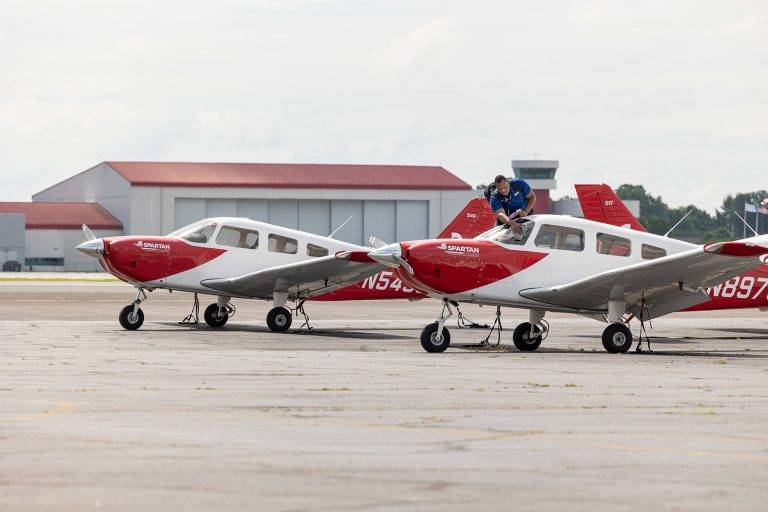
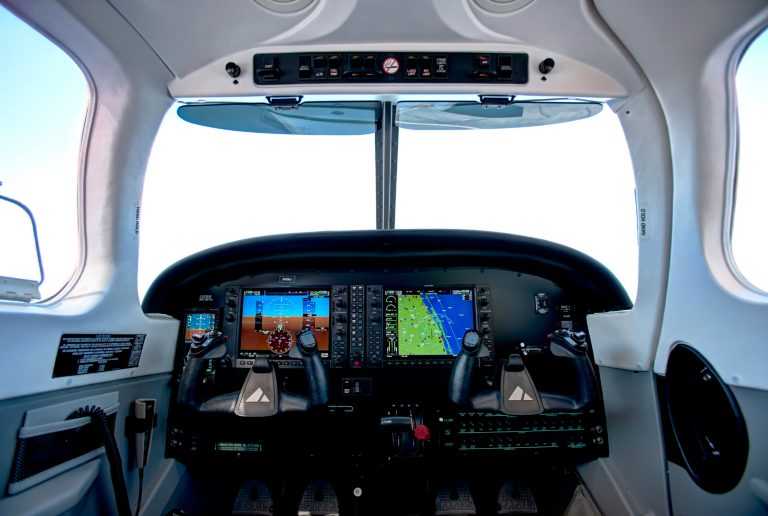
Spartan’s Flight Facility at Tulsa Riverside Airport (RVS) is a tower-controlled airport with dual runways including crosswind runway and instrument landing approach capabilities. Real-time weather information systems are provided in flight operations.
Lower Cost of Living
Relocating to Tulsa means your money goes further during training:


Train for an AAS Degree with Leadership Skills Employers Desire
Unlike certificate-only flight schools, Spartan College of Aeronautics and Technology’s flight program leads to an Associate of Applied Science (AAS) degree. The general education courses enhance students’ background and intellectual proficiency. Aviation safety, professionalism, and precision flying are emphasized in all courses. This degree not only qualifies graduates for the reduced-hour restricted ATP (1,250 hours vs. 1,500) but also provides the academic foundation to continue to Spartan’s Bachelor of Science in Technology Management (BSTM) program.
Key Details

Student Housing: The Spartan Residence Hall is located directly behind Spartan’s main campus. Apartment-style living with private bedrooms and shared common areas. Each unit is furnished and includes washer/dryer, refrigerator, dishwasher, stove, microwave, and furniture. Four private bedrooms and two full bathrooms per unit. Collegiate Housing Services partnership for additional options.
Financial Aid: Financial aid is available for those who qualify and apply, including loans, grants, and scholarships.
Career Services: Career Services representatives work with graduates to provide guidance throughout the job search process.
Tulsa Consumer Information - ©2024 Spartan College of Aeronautics and Technology | Licensed by the O.B.P.V.S. | Privacy Policy | Opt-out Policy